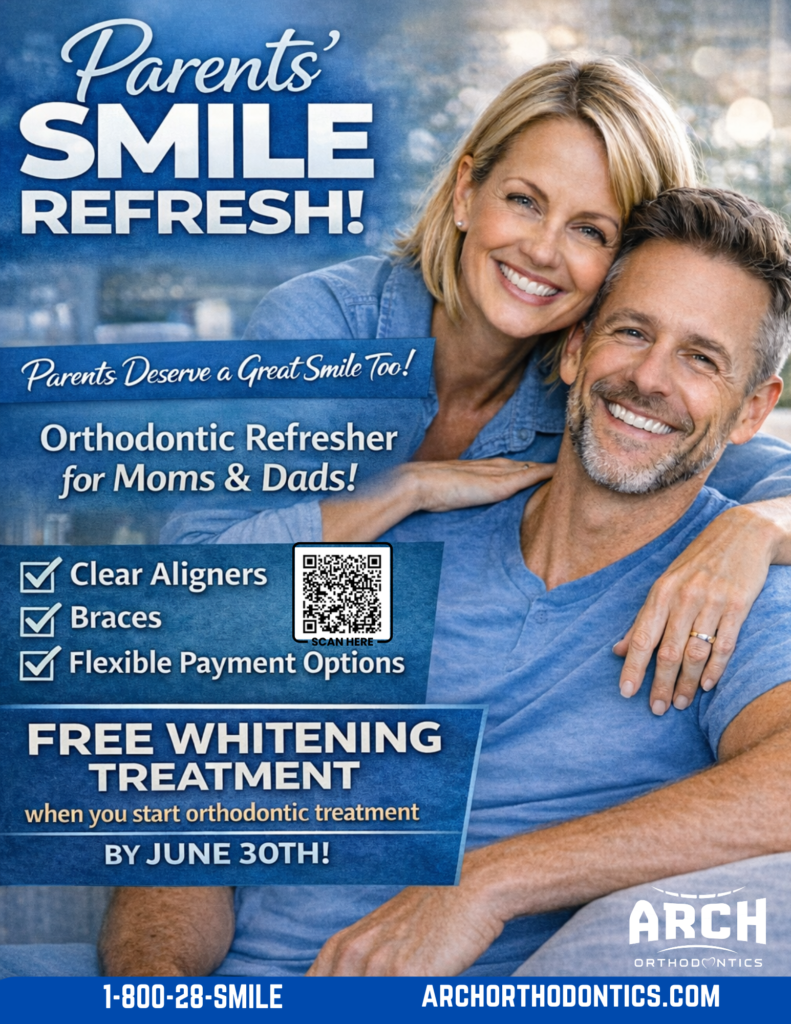

Am I Too Old for Braces? The Short Answer Is No
No, you’re not too old for braces. If you’ve been wondering whether it’s too late after 30, 40, or even 50, there’s no upper age limit for orthodontic treatment. Healthy teeth and gums can move at any age. A growing number of orthodontic patients today are adults, and that number keeps climbing every year .
The process works the same way for adults as it does for teens. Treatment addresses alignment issues, bite concerns, and jaw irregularities through bone remodeling, the same biological process your body uses throughout life. The real requirements for successful treatment aren’t about your birth certificate. They’re about the health of your bone and gum tissue.
At 32, 45, or 60, the real question isn’t your age. It’s whether your teeth and gums are healthy enough. For most adults, the answer is yes. The board-certified orthodontists at ARCH Orthodontics regularly treat adults in their 30s through 70s, and the results speak for themselves. Whether you’ve been thinking about this for years or just started researching your options, you deserve to know that age alone should never hold you back from getting the smile you want. Plenty of adults start treatment later in life and wish they’d done it sooner.
How Does Adult Orthodontic Treatment Work After 30?
Your first visit includes a full exam with X-rays to assess bone density and gum health. This evaluation tells your orthodontist exactly what’s happening beneath the surface, including any areas that may need attention before treatment begins.
From there, you’ll receive a treatment plan designed for your specific needs. Options include:
- Traditional metal braces, proven effective for complex cases
- Brava, a hidden, behind-the-teeth system using Independent Mover™ technology
- Invisalign, clear, removable aligners for flexibility
Here’s what makes tooth movement possible at any age: bone remodeling. When gentle pressure is applied to your teeth, the bone on one side breaks down while new bone forms on the other. This process happens throughout your entire life. It never stops. Your bones are constantly renewing themselves, which is why orthodontic treatment can succeed well into your 50s, 60s, and beyond.
Benefits of Getting Braces as an Adult
Aligned teeth affect more than how your smile looks. The benefits patients at ARCH Orthodontics experience extend into oral health, daily comfort, and confidence.
Easier Brushing and Flossing
Crowded or overlapping teeth create tight spaces where plaque hides. Aligned teeth are simply easier to brush and floss effectively, which reduces your risk of cavities and gum disease over time. Many patients tell us this is one of the first changes they notice during treatment.
Relief From Jaw Pain and Discomfort
Bite misalignment puts stress on your jaw joints and muscles. Correcting these issues can relieve chronic jaw soreness, headaches, and symptoms associated with TMJ disorders. If you’ve been dealing with clicking, popping, or tension in your jaw, alignment could be part of the solution.
Does Alignment Affect Breathing and Sleep Quality?
Proper alignment supports a healthy airway. Some patients notice improvements in breathing patterns and sleep quality after treatment. This benefit doesn’t get talked about often, but it can make a real difference in daily energy levels.
A Smile That Builds Confidence
Feeling good about your smile changes how you present yourself. People often report more confidence in meetings, interviews, and social situations after completing treatment. Feeling comfortable when you smile affects how you communicate and connect with people.
Misaligned teeth also wear unevenly, making them more prone to chips, cracks, and fractures. Addressing alignment now prevents accelerated wear and helps you avoid expensive restorative work down the road.
Adult Braces vs. Teen Braces: Key Differences
| Factor | Teen Treatment | Adult Treatment |
|---|---|---|
| Jaw Growth | Active growth allows skeletal changes | No active growth; different approaches for skeletal issues |
| Bone Density | Less dense, faster remodeling | Denser bone, may extend timeline slightly |
| Existing Dental Work | Rare | Common (crowns, implants, bridges require planning) |
| Compliance | Variable | Typically higher, since adults choose treatment themselves |
| Aesthetic Preferences | Often less concerned | Frequently prefer discreet options |
The biggest difference comes down to biology. Teens have actively growing jaws, which gives orthodontists more options for skeletal corrections. Without that active growth, certain corrections may require different approaches for adults. Denser bone can mean tooth movement takes a bit more time, but it doesn’t prevent successful results.
One advantage adults have? Motivation. When you choose treatment yourself and invest in it yourself, you’re more likely to follow instructions carefully.
Discreet treatment options are popular among working professionals. Invisalign clear aligners and Brava’s behind-the-teeth system offer effective alternatives to traditional metal braces. You can align your teeth without everyone at work noticing.
What Does Adult Orthodontic Treatment Typically Run?
Adult orthodontic treatment typically ranges from $3,000 to $8,000 , depending on the type of braces you choose, case complexity, and treatment length. A simple alignment case will be on the lower end, while a complex bite correction requiring multiple phases will be higher. Your orthodontist at ARCH Orthodontics will outline expected pricing during your first visit.
Good news for adults considering treatment: many dental insurance plans now include orthodontic benefits for adults, not just children. Check with your provider to see what’s covered.
Even without insurance coverage, budget-friendly options exist. Many practices offer:
- Flexible low monthly payment plans
- The ability to use HSA or FSA funds
- Interest-free financing options
The ARCH Orthodontics team can walk you through financial options during your free consult. Budget shouldn’t prevent anyone from getting the treatment they need.
There’s a financial upside too: investing in alignment now often reduces your long-term dental expenses. Properly aligned teeth are less prone to decay, gum disease, and damage that requires expensive restorative work later.
Who Is a Good Candidate for Braces Over 30, 40, or 50?
The primary requirements for adult orthodontic treatment are healthy gums and adequate bone support. Age alone doesn’t determine candidacy.
You’re likely a good candidate if you have:
- Healthy gum tissue without active periodontal disease
- Sufficient bone density to support tooth movement
- Commitment to maintaining good oral hygiene during treatment
- Realistic expectations about timeline and results
What may need to be addressed first:
Periodontal disease must be managed and stabilized before starting orthodontic treatment. Moving teeth through unhealthy gum tissue leads to poor outcomes. Your orthodontist may recommend seeing a periodontist first.
People with crowns, bridges, or even missing teeth can absolutely undergo orthodontic treatment. Brackets can be bonded to crowns. Spaces from missing teeth can sometimes be closed with braces, or the space can be maintained for a future implant. Conditions like osteoporosis may require coordination between your orthodontist and physician, but they rarely prevent treatment entirely.
Frequently Asked Questions About Adult Braces
Is 30 too old for braces?
No. Adults of any age with healthy teeth and gums are candidates for orthodontic treatment. Thirty is actually quite young in the world of adult orthodontics. Many patients start treatment in their 40s, 50s, and beyond.
Do braces take longer for adults?
Adult treatment typically takes 12 to 36 months, sometimes slightly longer than teen treatment due to denser bone tissue. Many adults finish in the same timeframe as teens with similar corrections. Your orthodontist will give you a personalized estimate during your first visit.
Can I get Invisalign instead of metal braces?
Yes. Clear aligners effectively treat many adult cases, including crowding, spacing, and certain bite issues. During your first visit, your orthodontist will let you know if Invisalign is right for your specific needs. Brava is another discreet option that sits behind your teeth, completely hidden from view.
Will braces affect my daily life at work?
Discreet options minimize visibility. Invisalign aligners are nearly invisible and removable for important meetings or presentations. Brava sits behind your teeth where no one can see it. Even traditional braces are smaller and less noticeable than they were years ago. Most adults find treatment fits into their professional lives more easily than expected.
Is orthodontic treatment safe for older adults?
Yes, with proper evaluation and healthy gums and bone support. Board-certified orthodontists conduct thorough assessments before recommending treatment. If anything needs attention first, your orthodontist will tell you upfront and create a plan that prioritizes your health. Your age isn’t what matters, healthy teeth and gums are, and the team at ARCH Orthodontics can help you figure out the rest at your free consult.